


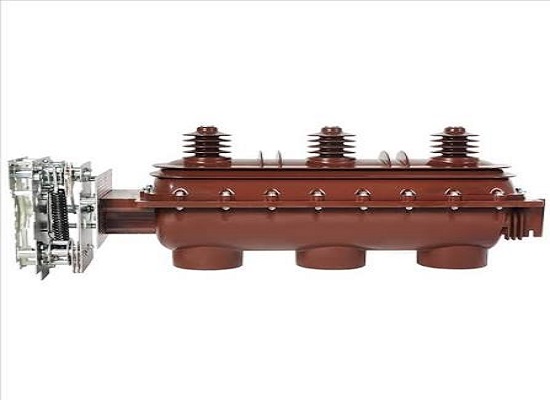
Q1. Why is a load-break switch unsuitable as a direct replacement for a medium-voltage circuit breaker, even when both devices have similar current ratings?
A load-break switch (LBS) and a circuit breaker (CB) may both be rated for the same continuous current (for example, 630 A or 1250 A), but they serve fundamentally different functions within the power system.
An indoor LBS is designed to:
- Make and break normal load current.
- Switch cable charging current and transformer magnetizing current.
- Provide visible or verifiable isolation.
- Perform sectionalizing operations during network reconfiguration.
However, an LBS is generally not designed to interrupt short-circuit current. It can often withstand and make onto a fault for a specified duration, but fault interruption must be provided by upstream protection devices or by a switch-fuse combination. IEC 62271-103 defines the performance requirements for high-voltage AC switches, while fault-clearing responsibilities belong to circuit breakers governed by different interruption requirements.
The engineering mistake frequently encountered in MV projects is assuming that a 630 A LBS can perform the same protection function as a 630 A vacuum circuit breaker. Current rating alone does not indicate fault-breaking capability.
Q2. What switching duties place the greatest dielectric and transient stress on an indoor load-break switch?
Contrary to common assumptions, the most demanding operations are not always associated with high load current.
Particularly severe duties include:
- Transformer magnetizing current interruption.
- No-load transformer switching.
- Cable charging current interruption.
- Line charging current interruption.
- Capacitive switching in long underground cable networks.
- Earth-fault current switching (where specified).
These duties generate transient recovery voltages (TRV), current chopping phenomena, and restrikes that can exceed the electrical stress associated with normal feeder load switching.
For this reason, IEC classifications include specific capacitive switching performance categories and endurance classes. Engineers should verify not only the rated current but also the switch’s capacitive switching and inductive switching performance when specifying equipment for renewable-energy collector systems, industrial cable networks, or urban distribution substations.
In modern cable-dominated distribution systems, capacitive switching performance often becomes more critical than simple load-current interruption capability.
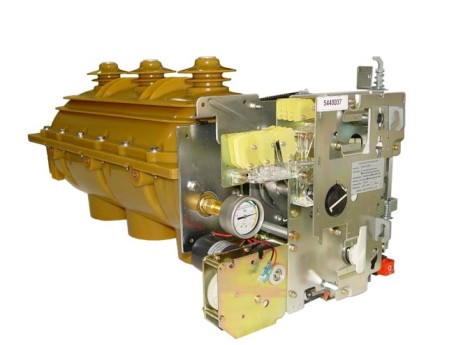
Indoor load break switch
Q3. What are the key engineering considerations when specifying a switch-fuse combination instead of a circuit-breaker feeder?
The switch-fuse combination remains one of the most economical protection solutions for MV transformer feeders.
In such arrangements:
- The load-break switch performs routine switching and isolation.
- Current-limiting HRC fuses provide short-circuit interruption.
- The striker mechanism trips the switch when a fuse operates.
- The entire assembly functions as a coordinated protection system.
When evaluating switch-fuse combinations, engineers should verify:
- Transformer inrush withstand capability.
- Fuse-switch tripping coordination.
- Minimum and maximum fault-current levels.
- Fuse energy let-through (I²t).
- Transformer thermal withstand characteristics.
- Arc-flash reduction objectives.
Improper fuse selection may result in nuisance operations during transformer energization or inadequate protection during low-level faults.
IEC 62271-105 specifically addresses switch-fuse combinations and their coordinated performance requirements.
For transformer ratings below approximately 2–3 MVA, a properly engineered switch-fuse combination frequently provides a lower life-cycle cost than a vacuum circuit breaker solution.
Q4. How do mechanical endurance classes affect long-term reliability in frequently operated MV networks?
Many specifications focus heavily on electrical ratings while overlooking mechanical endurance classification.
According to IEC classifications, switches may be assigned different mechanical endurance categories (such as M1 and M2) and electrical endurance classes (E1–E3). Higher classes indicate greater capability to withstand repeated operations while maintaining specified performance.
This becomes particularly important in:
- Ring Main Units (RMUs).
- Distribution automation schemes.
- Smart-grid sectionalizing applications.
- Renewable-energy collector networks.
- Industrial plants with frequent feeder transfers.
A switch operating only a few times per year may never approach its endurance limit. However, motorized LBS units used in automated distribution restoration schemes may perform hundreds or thousands of operations over their service life.
Engineers should therefore evaluate:
- Mechanical operation count.
- Spring mechanism durability.
- Motor operator life expectancy.
- Auxiliary switch reliability.
- Position indication integrity.
- Interlocking system robustness.
In modern automated MV networks, mechanical endurance is often a more significant reliability factor than dielectric aging.
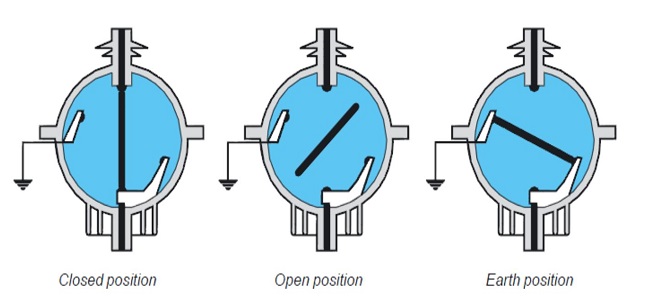
Medium voltage load break switch operation
Q5. What failure mechanisms should be monitored during condition assessment of aging indoor load-break switches?
Aging mechanisms differ significantly depending on whether the switch uses air, vacuum, or gas insulation technology.
Critical inspection points include:
Mechanical System
- Spring fatigue.
- Lubricant degradation.
- Increased operating torque.
- Linkage wear.
- Interlock malfunction.
Current-Carrying Path
- Contact erosion.
- Increased contact resistance.
- Hot spots identified through thermography.
- Oxidation of conducting surfaces.
Insulation System
- Partial discharge activity.
- Surface tracking.
- Moisture ingress.
- Insulation contamination.
Gas-Insulated Designs
- Gas density reduction.
- Seal deterioration.
- Moisture contamination.
- Internal insulation degradation.
Vacuum Designs
- Vacuum bottle integrity.
- Contact wear estimation.
- Actuator synchronization.
Advanced asset-management programs increasingly combine:
- Infrared thermography.
- Partial-discharge monitoring.
- Dynamic contact-resistance measurements.
- Mechanical signature analysis.
- Operation-counter trending.
These predictive techniques allow utilities and industrial operators to identify degradation before switching performance or personnel safety is compromised.
Key Engineering Takeaway
An indoor medium-voltage load-break switch should be viewed primarily as a switching and isolation device, not a fault-clearing device. Proper application depends on understanding its switching duty, endurance classification, protection coordination, and condition-monitoring requirements. In modern MV networks, successful LBS specification is increasingly driven by system architecture, automation strategy, and asset-management philosophy rather than by current rating alone.