


Introduction:
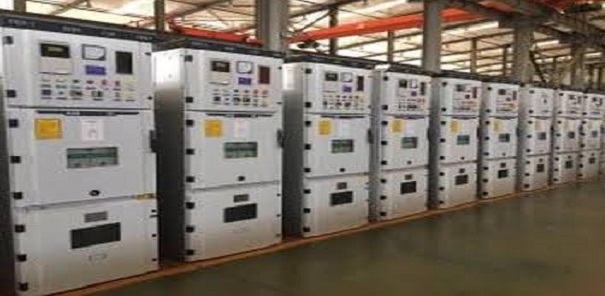
Space limitations, increasing electricity demand and the need for more reliable distribution networks have made compact medium voltage switchgear an important technology in modern power systems.
Traditional air-insulated medium voltage switchgear can require considerable floor space, particularly when a substation needs several incoming and outgoing feeders, protection functions, metering and transformer connections. Compact switchgear reduces the physical footprint by integrating switching and protection functions into a relatively small metal-enclosed assembly.
For distribution engineers, however, “compact” should not be interpreted simply as “small.” A good compact MV switchgear solution must also provide adequate dielectric insulation, short-circuit withstand capability, internal-arc protection, operational interlocking, maintainability, expandability and compatibility with the protection and automation philosophy of the network.
Among the major international manufacturers, Schneider Electric, ABB, Siemens and Eaton have particularly strong portfolios in this area. Their products are widely used in secondary distribution networks, industrial facilities, renewable-energy projects, infrastructure and commercial buildings.
This article examines four representative product families from these manufacturers and explains where each technology has practical advantages.
What is compact medium voltage switchgear?
Compact medium voltage switchgear is generally a metal-enclosed MV switching assembly in which several primary functions are integrated into a small footprint.
Depending on the design, a compact unit may incorporate:
- Load-break switches
- Circuit breakers
- Disconnectors
- Earthing switches
- Busbars
- Current and voltage measurement
- Protection relays
- Cable connection systems
- Transformer feeders
- Ring-main feeders
- Remote-control and automation equipment
A large proportion of compact MV equipment used in distribution networks is based on the Ring Main Unit (RMU) concept. An RMU normally provides two or more ring feeders together with a transformer feeder, allowing the transformer to be supplied from alternative directions when the network is operated as a ring.
There are two major technological approaches:
GIS: Gas-insulated switchgear, in which primary components are enclosed and insulated using a gas or alternative insulating medium.
AIS: Air-insulated switchgear, in which air is the principal insulation medium around the primary conductors.
Compact GIS generally provides the smallest footprint, while AIS can provide greater accessibility and modularity in some applications.
1. Schneider Electric — RM6
Schneider Electric’s RM6 is one of the best-known compact MV ring main unit platforms in the international distribution market.
The RM6 is designed for secondary distribution applications and is available up to 24 kV and 630 A, with configurations covering transformer connections, ring feeders and other MV distribution functions.
One of the major reasons for its popularity is the integration of several functions into a compact, factory-assembled unit.
Main strengths
1. Very compact design
The RM6 is particularly suitable when substation space is limited. This is important in underground substations, urban distribution networks, commercial buildings and compact transformer substations.
2. Strong experience in secondary distribution
The RM6 has a large installed base and is specifically designed around the requirements of MV secondary distribution. This makes it a familiar platform for many utilities and contractors.
3. Good safety philosophy
The design incorporates metal enclosures, internal-arc-rated construction on applicable configurations, visible voltage indication and earthing arrangements intended to reduce operational risk.
4. Flexible configurations
The RM6 family can be configured for different combinations of switching and protection functions. This allows engineers to select a configuration according to the transformer rating and network topology instead of using a completely standardized arrangement for every project.
5. SF6-free transition
An important point for engineers specifying new equipment in 2026 is that Schneider Electric also offers the RM AirSeT family as an SF6-free alternative using pure air insulation. This is particularly relevant for projects affected by tightening environmental regulations.
Practical applications
RM6 is particularly appropriate for:
- Underground distribution substations
- Utility secondary distribution
- Compact transformer substations
- Commercial buildings
- Industrial facilities
- Renewable-energy installations
- Urban networks where floor area is expensive
Engineering consideration
For a new project, engineers should not automatically specify the traditional SF6 version simply because it has an established installed base. If the project is in a jurisdiction with restrictions on SF6 equipment, or the owner has a long-term decarbonization policy, the SF6-free alternative should be evaluated during the specification stage.
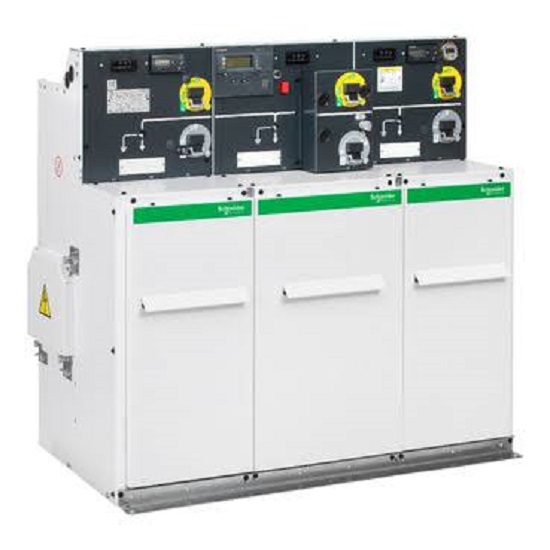
Schneider Electric RM6 compact switchgear
2. ABB — SafeRing and SafePlus
ABB’s SafeRing and SafePlus platform is another major compact MV switchgear family used extensively in secondary distribution.
The two products have different philosophies.
SafeRing is primarily a standardized compact RMU platform, while SafePlus provides greater configuration flexibility and is better suited when the engineer requires a wider range of feeder, protection and automation arrangements.
The traditional portfolio extends to 40.5 kV, while the newer SafeRing Air/SafePlus Air SF6-free versions cover applications up to 24 kV.
Main strengths
1. Wide voltage range
The availability of SafeRing/SafePlus configurations up to 40.5 kV is an important advantage when the project requires a compact GIS solution above the common 12–24 kV distribution range.
2. Standardized RMU and configurable switchgear options
SafeRing is attractive for standardized distribution projects, while SafePlus allows engineers greater freedom in combining circuit breakers, load-break switches, switch-fuses and other functions.
3. Good performance in demanding environments
ABB specifically positions the product family for indoor and outdoor applications, including harsh weather and high-altitude installations. The sealed enclosure also protects primary components from dust, humidity and other environmental influences.
4. Strong protection and automation options
SafePlus is particularly interesting for engineers who need more than a basic RMU. Advanced protection relays, sensors, automation and communication functions can be integrated into appropriate configurations.
5. SF6-free option
The SafeRing Air/SafePlus Air platform uses dry air as the insulation medium and retains the same general interface, footprint and operating philosophy as the corresponding conventional products. This can simplify migration toward SF6-free equipment.
Practical applications
ABB‘s platform is well suited to:
- Utility distribution networks
- Renewable-energy plants
- Data centers
- Industrial plants
- Infrastructure projects
- Transportation facilities
- Commercial buildings
- Distribution substations
Engineering consideration
SafeRing and SafePlus should not be regarded as interchangeable products. SafeRing is a strong choice when a standardized RMU is required, whereas SafePlus becomes more attractive when the project requires a customized functional-unit arrangement or more sophisticated protection and automation.
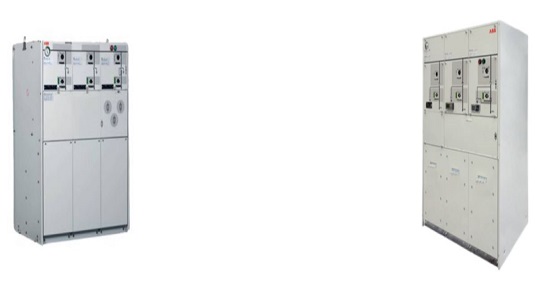
ABB SafeRing SafePlus compact switchgear
3. Siemens — 8DJH
Siemens has a long history in gas-insulated MV switchgear, and the 8DJH family is particularly relevant to compact secondary distribution.
The conventional 8DJH 36 is designed for applications up to 36 kV, while the 8DJH 24 blue GIS provides an SF6-free solution up to 24 kV.
The 8DJH 24 uses Clean Air, based on the natural components of ambient air, rather than fluorinated insulating gases.
Main strengths
1. Compact GIS architecture
The 8DJH concept combines the space-saving advantages of GIS with a sealed enclosure. This is valuable where substation dimensions are constrained.
2. Hermetically sealed primary system
The sealed enclosure reduces the influence of external conditions such as dust, humidity, condensation and saline environments. It also supports a maintenance-free philosophy for the primary switching enclosure.
3. Strong environmental performance in the blue GIS version
The 8DJH 24 blue GIS replaces fluorinated insulating gas with Clean Air. Siemens states that the insulating medium has a global warming potential below 1 and is non-toxic and non-flammable.
4. Digitalization
The newer 8DJH 24 platform supports condition monitoring, remote control and automation. This is increasingly important as distribution networks become more automated and utilities move toward condition-based maintenance.
5. Familiar operating philosophy
For utilities already using the 8DJH family, the transition to the blue GIS version can be attractive because Siemens has maintained a familiar operating concept and compact form factor.
Practical applications
The 8DJH family can be considered for:
- Utility secondary distribution
- Ring-main units
- Customer substations
- Industrial power systems
- Solar and wind farms
- Hydroelectric plants
- Data centers
- Airports and railway infrastructure
- High-rise buildings
Engineering consideration
The major distinction is between the conventional SF6-insulated 8DJH products and the newer SF6-free blue GIS solutions. For a new project, the selection should be made after checking the exact voltage, fault-current rating, functional-unit configuration and local regulatory requirements rather than simply specifying “8DJH.”
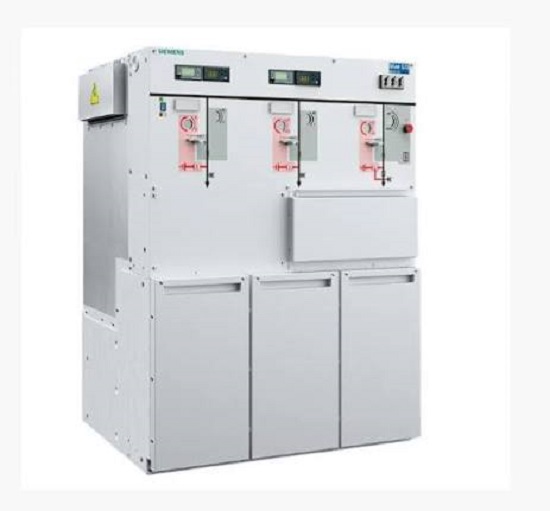
Siemens — 8DJH compact switchgear
4. Eaton — Xiria
Eaton‘s Xiria family takes a particularly interesting approach to compact MV switchgear because it was designed around SF6-free technology.
The Xiria platform is intended for ring-main and secondary distribution applications and is available up to 24 kV and 630 A in the established product range.
Eaton also offers Xiria NGX, a newer modular platform extending the concept to higher electrical ratings, including configurations up to 24 kV, 1250 A and 25 kA.
Main strengths
1. SF6-free technology
The absence of SF6 is one of Xiria’s most significant advantages. The equipment uses vacuum switching technology and alternative insulation technology, eliminating the need to manage SF6 throughout the equipment life cycle.
2. Low maintenance
Eaton’s primary components and mechanisms are enclosed in a sealed housing. The company describes the switching equipment as maintenance-free, which can significantly simplify the maintenance strategy for distribution substations.
3. Compact footprint
The Xiria design is optimized for applications where available floor area is limited.
4. Operational safety
Inspection windows allow operators to observe the position of switching components without opening the enclosure. Mechanical and electrical interlocks are also used to reduce the possibility of incorrect operation.
5. Expandability
The Xiria family includes block and extendable versions. This is useful when the engineer anticipates future feeder additions.
6. New generation with higher ratings
Xiria NGX extends the concept toward higher current and short-circuit ratings while retaining a compact modular architecture. Its 500 mm-wide panel design is particularly interesting for space-constrained distribution substations.
Practical applications
Xiria is suitable for:
- Distribution utilities
- Commercial buildings
- Industrial facilities
- Solar farms
- Wind farms
- Ring-main substations
- Secondary distribution networks
Engineering consideration
Xiria is particularly attractive when the project specification calls for an SF6-free solution from the outset. However, the engineer must verify the exact electrical ratings and available functional units because not every Xiria configuration has the same capabilities.
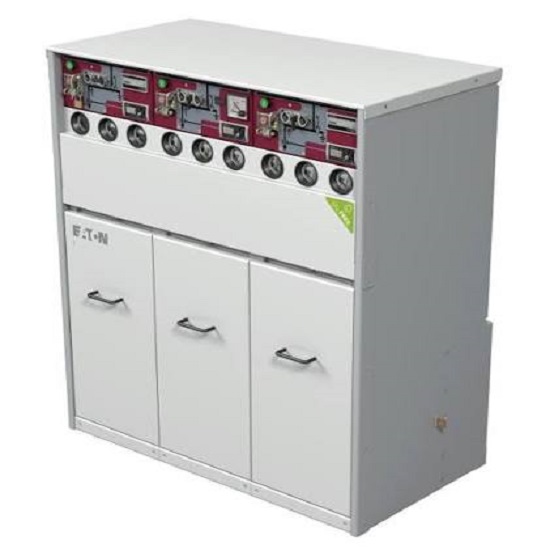
Eaton — Xiria compact switchgear
Advantages of compact medium voltage switchgear
The popularity of compact MV switchgear is not simply a result of smaller dimensions. Several technical and economic advantages explain its growing use.
1. Reduced substation footprint
This is normally the first advantage noticed by the project team. Compact GIS can substantially reduce the space required for an MV installation.
This is especially valuable in:
- Urban substations
- Underground rooms
- High-rise buildings
- Data centers
- Industrial plants
- Renewable-energy substations
2. Better protection from environmental conditions
Sealed primary compartments can protect switching components from dust, humidity, pollution, condensation and other environmental influences.
3. Reduced maintenance
Because many primary components are enclosed and protected from the environment, routine maintenance requirements can be lower than with conventional open or accessible arrangements.
4. Faster installation
Factory-assembled and tested units can reduce site work. This is particularly valuable for projects with short construction schedules.
5. Improved operational safety
Metal-enclosed construction, interlocking systems, earthing arrangements and internal-arc-rated designs can improve personnel safety when the equipment is correctly specified and operated.
6. Better suitability for automation
Modern compact MV switchgear can incorporate sensors, digital protection relays, remote-control interfaces and communication systems, making it suitable for smart-grid applications.
Disadvantages and limitations
Compact switchgear is not automatically the best solution for every project.
1. Higher initial equipment cost
Compact GIS can have a higher purchase price than a comparable conventional AIS arrangement. The correct comparison should therefore be based on total cost of ownership, not equipment price alone.
2. More difficult access to some primary components
The same sealed construction that provides environmental protection can make certain repairs or modifications more complicated.
3. Limited field modification
Engineers should define the required number and type of feeders before procurement. Some compact platforms have less freedom for field modification than conventional modular AIS switchgear.
4. Dependence on manufacturer-specific components
Specialized cable connectors, operating mechanisms, sensors and accessories can increase dependence on the original manufacturer or approved suppliers.
5. Environmental considerations for conventional SF6 GIS
Where SF6 is used, the environmental impact and regulatory requirements must be considered throughout the equipment life cycle. This is becoming increasingly important because regulations governing fluorinated gases are changing.
6. Expansion must be considered early
An engineer should check whether future panels can actually be added to the selected compact switchgear and what additional clearance, cable work and protection modifications would be required.
Where should compact MV switchgear be used?
From a practical engineering perspective, compact MV switchgear is particularly attractive when at least one of the following conditions exists:
Limited space: Urban and indoor substations are obvious candidates.
Difficult environmental conditions: GIS can be advantageous in dusty, humid, polluted or corrosive environments.
High reliability requirement: Sealed primary systems can reduce exposure to environmental contamination.
Fast project execution: Factory-assembled equipment can reduce installation work.
Renewable-energy integration: Solar and wind projects frequently require compact RMUs and transformer feeders.
Digital distribution networks: Compact switchgear with sensors, protection relays and communication systems can form part of an automated distribution network.
Environmental targets: SF6-free solutions from Schneider Electric, ABB, Siemens and Eaton should be considered where the project owner requires elimination of fluorinated gases.
Practical selection checklist for power engineers
Before selecting a compact MV switchgear, the following parameters should be checked against the project specification:
- Rated voltage and insulation level
- Rated normal current
- Short-time withstand current
- Peak withstand current
- Short-circuit duration
- Internal arc classification
- Loss of Service Continuity (LSC)
- Partition class
- Number and type of feeders
- Circuit-breaker versus load-break-switch requirements
- Protection-relay requirements
- CT/VT or sensor requirements
- Cable termination type
- Earthing-switch configuration
- Future extension requirements
- Indoor/outdoor installation
- Altitude and ambient temperature
- Seismic requirements
- SF6-free requirements
- Remote control and IEC 61850 requirements
- Spare-parts availability
- Local service and commissioning capability
- Life-cycle cost
- End-of-life requirements
This checklist is important because a switchgear unit with a smaller footprint is not necessarily the most economical solution over 30–40 years of operation.
Final engineering assessment
The four manufacturers considered here represent four particularly strong approaches to compact medium voltage switchgear.
Schneider Electric RM6 stands out for its mature RMU concept, compact design, broad international use and strong secondary-distribution orientation.
ABB SafeRing/SafePlus is particularly attractive where an engineer needs a combination of standardized RMU solutions and more configurable compact switchgear, with both conventional and SF6-free options.
Siemens 8DJH combines established GIS technology with a strong digitalization platform, while the 8DJH 24 blue GIS provides a significant SF6-free option based on Clean Air.
Eaton Xiria is particularly interesting for projects where SF6-free technology, low maintenance and compact construction are high priorities. The newer Xiria NGX also demonstrates the industry’s movement toward higher current ratings in compact air-insulated GIS technology.
The most important conclusion for engineers is that there is no universally “best” compact MV switchgear. The correct selection depends on the network topology, fault level, environmental conditions, required protection functions, space restrictions, expansion philosophy, regulatory environment and life-cycle cost.
For a new project in 2026, SF6-free technology should be evaluated from the beginning rather than treated as an environmental option added at the end of the procurement process. At the same time, technical compliance with the applicable IEC requirements and the actual network duty must remain the primary selection criteria.